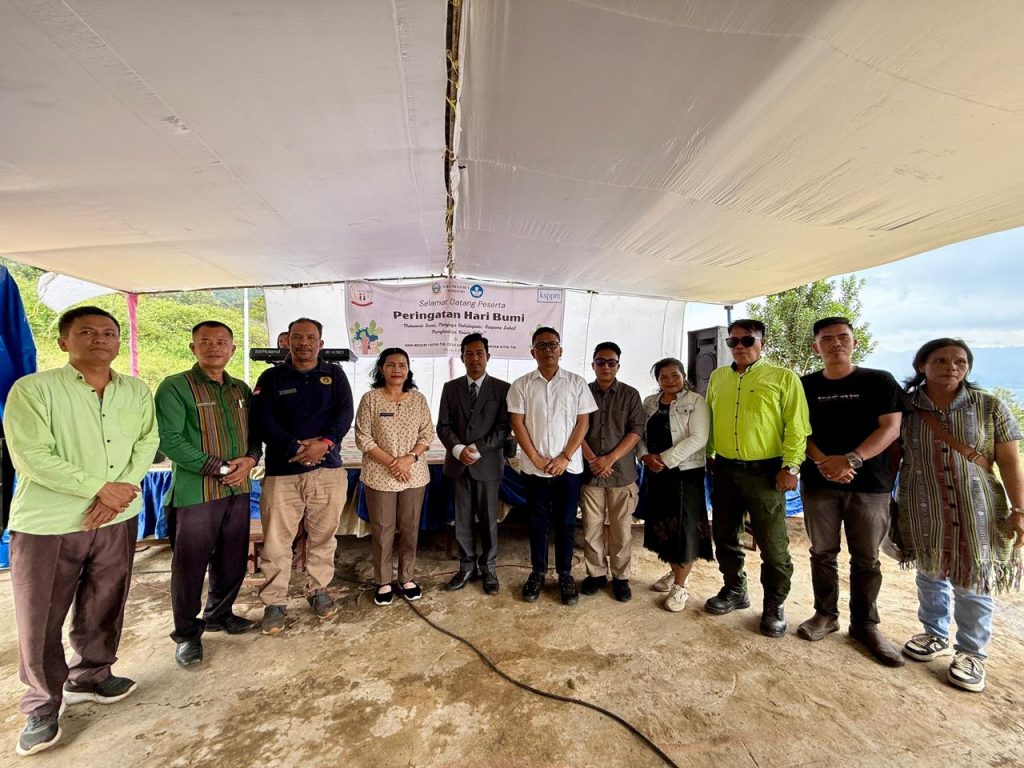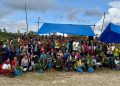

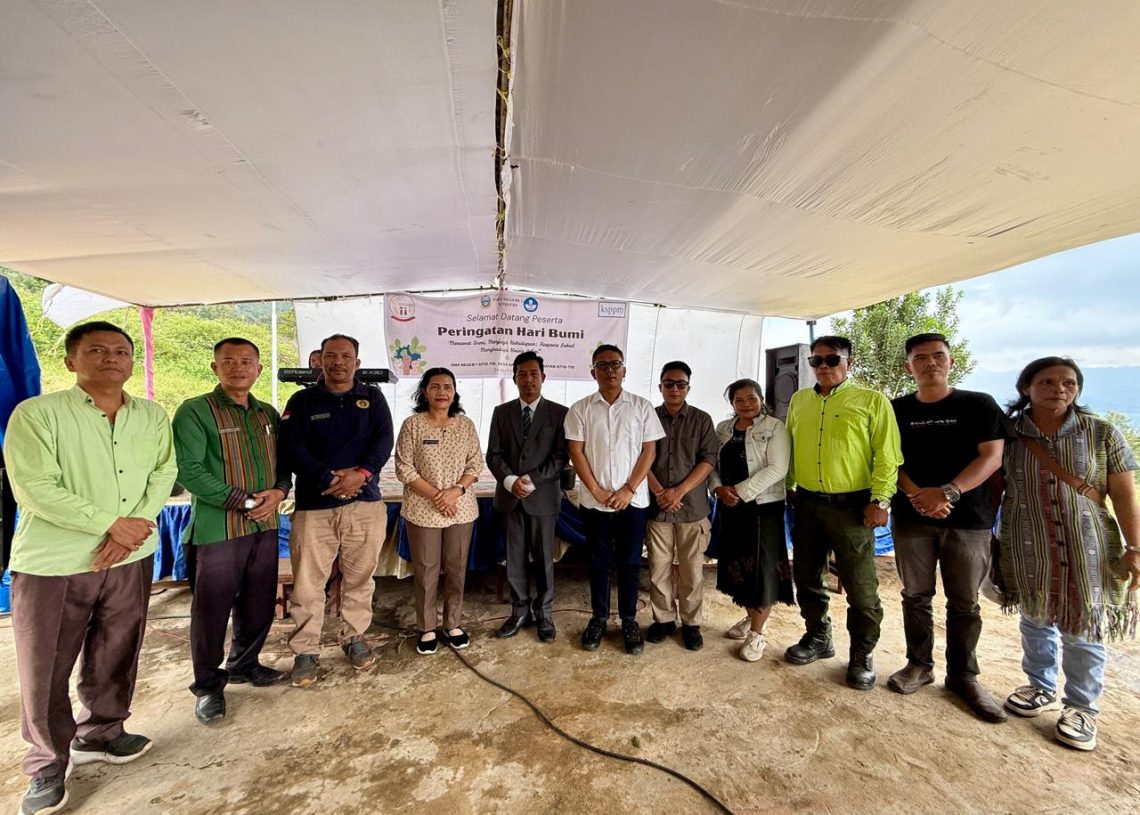
Surrounded by rolling hills and the deep blue waters of Lake Toba, the sun shone brightly over the school courtyard—the venue of this year’s Earth Day celebration. On 24 April 2026, SMA Negeri 1 Sitio-tio, a public high school in Sabulan Village, in collaboration with KSPPM, held an Earth Day event under the theme “Caring for the Earth, Caring for Life: Local Responses to the Climate Crisis.”

In attendance were notable figures such as Marizal Sirumapea (school principal for SMA N 1 Sitio-tio), Josor Tamba (District Head), Edison Pasaribu (Head of the Environment Department of Samosir Island), Head of the Indigenous Council, and Henrika Sitanggang (Representative for the Samosir’s Farmers Union). Other invitees include farmers, Buntu Mauli Village farmers group, 10th and 11th grade students and teachers of SMA N 1 Sitiotio.
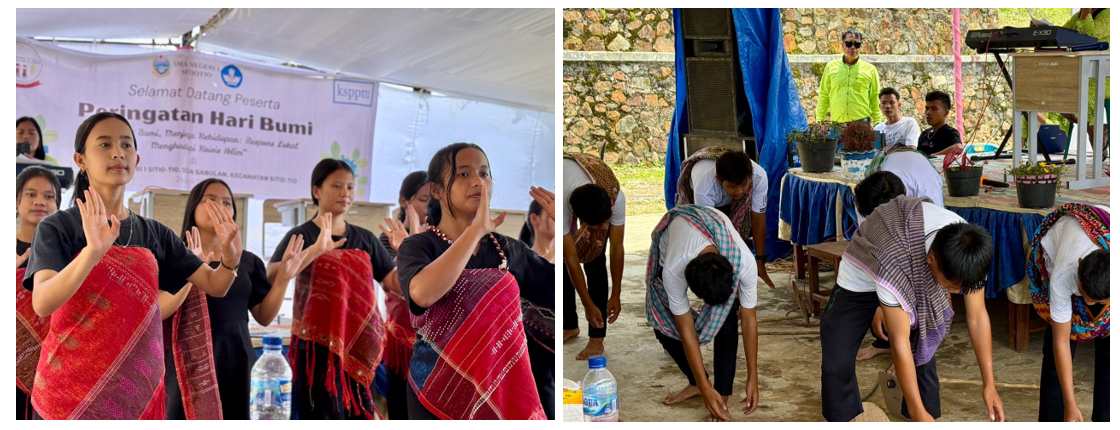
The event began with a series of vibrant student performances portraying the current state of Samosir’s ecological environment. Through dance and storytelling, students depicted large companies cutting down trees, followed by a symbolic figure of Mother Earth questioning the destruction of nature’s beauty. Other performances highlighted Batak cultural farming practices, as well as class presentations on “greener classrooms” and the values they represent. These performances demonstrated how environmental awareness and practices are already being introduced and instilled in students. At the same time, the event provided a meaningful space for them to deepen their understanding of how to confront the ongoing environmental crisis.

The highlight of the day was a panel discussion featuring Edison Pasaribu (Head of the Environment Department of Samosir Island), Marizal Sirumapea (school principal), and Roki Pasaribu (Director of KSPPM). Each speaker shared insights and reflections on the day’s theme.
Edison Pasaribu began by outlining several environmental programs currently being implemented by the department, including waste bin initiatives, increased use of solar energy, and tree-planting efforts – particularly distributing bayan seedlings (ficus) yearly or monthly to be planted in our own home as well as replacing Eucalyptus trees with ecologically appropriate species. He emphasized that achieving a cleaner island requires
collective effort from the public, a sentiment echoed by all three panelists. They highlighted how small, consistent habit changes can lead to meaningful impact: using tote bags or baskets instead of plastic bags, bringing reusable water bottles instead of buying bottled beverages, reducing smoking habits, and practicing proper waste separation at home through recycling and composting.
Marizal Sirumapea noted that waste separation is not a new concept, as many students are already familiar with it from school. He commended his students for actively participating in the school’s waste management program. More importantly, he explained how ecological values are integrated across subjects and classroom activities. Environmental responsibility, he stressed, is not limited to a single subject or teacher – it is embedded in all aspects of learning and daily life. For him, schools play a crucial role in shaping the next generation, both as individuals and as a community. Integrating environmental values into the curriculum reflects the school’s commitment to nurturing responsible and environmentally conscious citizens.
Roki Pasaribu reinforced the idea that students are the future stewards of the Earth. As those who will live longer with the consequences of today’s actions, they carry the responsibility to care for the environment starting now and not later in adulthood. This is precisely why KSPPM chose to hold the Earth Day event at a high school: to create a space where students can engage directly with environmental issues, particularly the growing climate crisis.
Pasaribu also challenged the common term “climate change,” suggesting that the current situation is more accurately described as a “climate crisis.” With rising global temperatures – often referred to as “global boiling” – and increasing ecological disasters, the scale and urgency of the issue have intensified. These disasters, often triggered or worsened by human activity, are becoming more frequent and severe. As Edison Pasaribu noted, both small-scale actions, such as increased electricity use, and large-scale activities like deforestation and forest fires contribute to this crisis.
The reality of this crisis is evident in everyday life. As we sat in the courtyard wearing short sleeves and light clothing, it was hard not to reflect on how, just a few years ago, our grandparents would have needed jackets in the same setting due to cooler temperatures. This shift is a clear reminder that our climate is changing rapidly. If we fail to adjust our habits, the future we face may be increasingly uncertain.
For this reason, it is crucial for the younger generation to take an active role in caring for the environment – starting with small, conscious actions that, collectively, can create lasting change.